Carrara Marble vs. Arabescato Marble: Understanding the Difference Between Two Italian Classics
When it comes to Italian white marble, Carrara and Arabescato often top the list of timeless choices. Both are quarried from the same region of Tuscany, Italy — the legendary Carrara area — yet they have distinct visual characteristics, rarity, and value that set them apart.
Whether you’re an architect, interior designer, or homeowner searching for the perfect white marble, understanding the difference between Carrara and Arabescato marble can help you make the right choice for your project.
1. Origin and Quarry Location
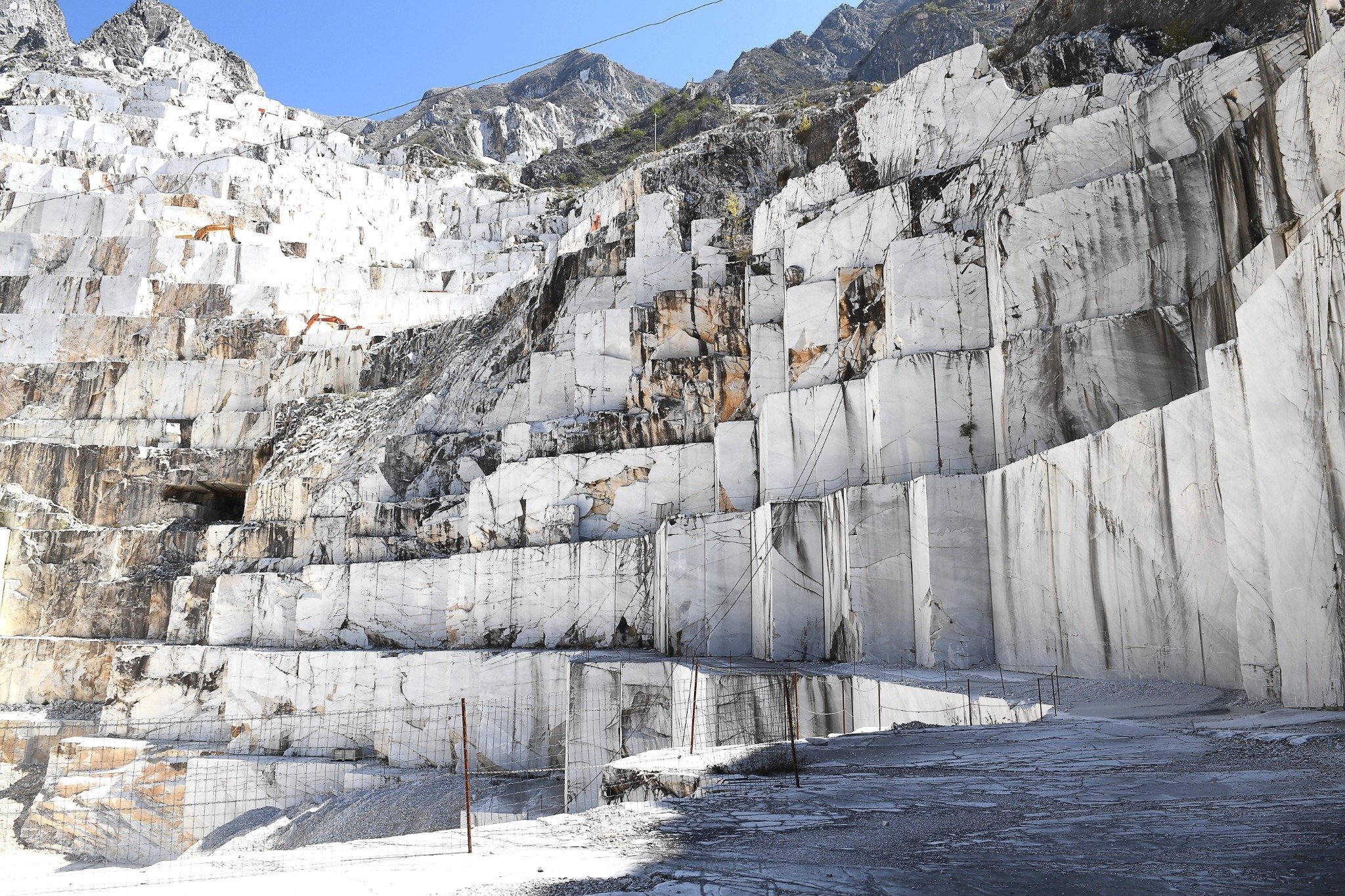
Both Carrara and Arabescato marbles are extracted from the Apuan Alps in Tuscany, Italy, but from different quarry sections.
Carrara Marble comes from the broader Carrara region and is one of the most abundant and widely available Italian marbles.
Arabescato Marble is quarried from select pockets within the same region, often from smaller and more exclusive quarries, making it rarer and more premium.
🪨 In short: All Arabescato comes from Carrara, but not all Carrara marble is Arabescato.
2. Color Tone and Veining Pattern
The most noticeable difference lies in the appearance — their tone, veining, and overall feel.
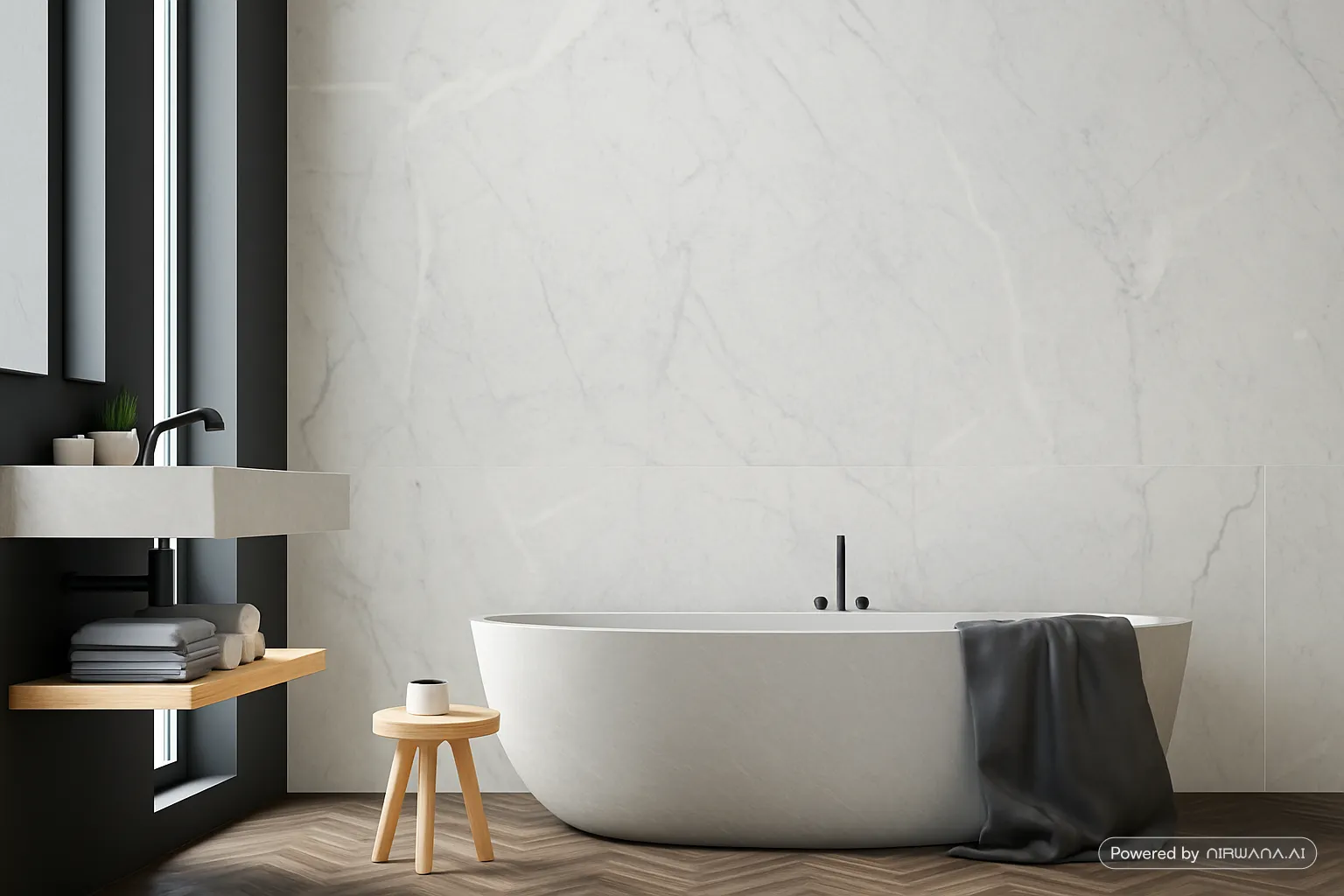
Carrara Marble usually has a softer white to light grey background with fine, feathery grey veins. Its look is subtle, calm, and understated — ideal for minimalist or contemporary spaces.
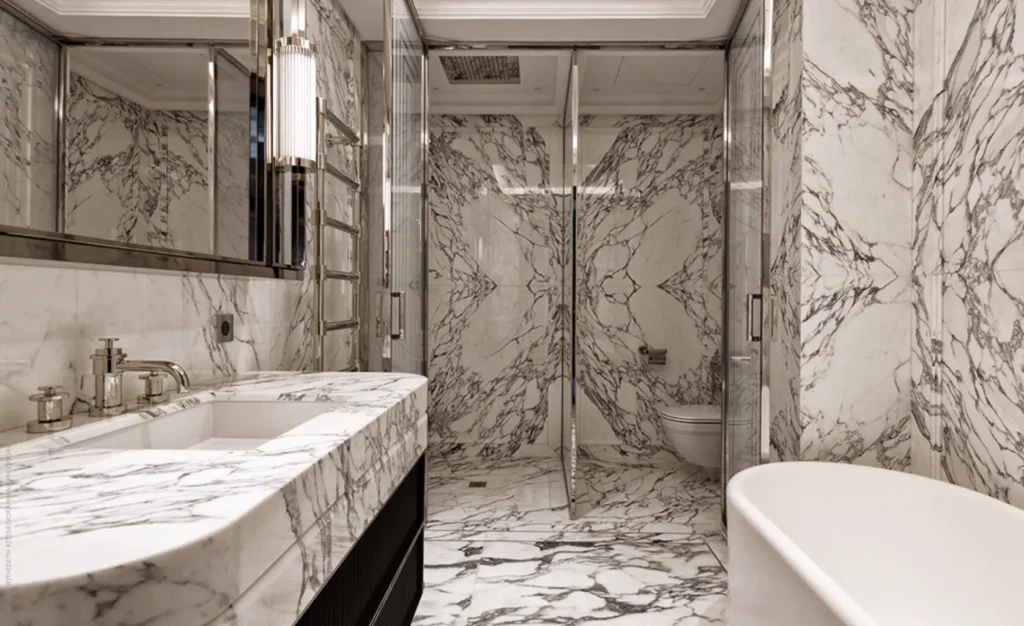
Arabescato Marble, on the other hand, has a brighter white background with bold, circular, and flowing grey veins that create dramatic patterns. Each slab looks like a piece of abstract art, giving a luxurious and expressive feel.
🎨 If Carrara is elegance in simplicity, Arabescato is art in motion.
3. Rarity and Cost
Because Arabescato is extracted in smaller quantities and from more selective quarries, it is rarer and more expensive than Carrara.
Carrara marble remains more widely available, making it a budget-friendly option for achieving the classic Italian marble look.
💰 Arabescato = Premium and exclusive. Carrara = Elegant and affordable.
4. Applications and Aesthetic Appeal
Both marbles are versatile, but their visual impact makes them suited for different styles and applications.
Carrara Marble: Perfect for countertops, flooring, and wall cladding in spaces where you want a refined, soft, and timeless appeal.
Arabescato Marble: Best for statement pieces — feature walls, bathroom vanities, and flooring in luxury spaces where bold design is desired.
🏛️ Design Tip: Use Carrara for a calm, uniform aesthetic and Arabescato for high-contrast, statement-making interiors.
5. Durability and Maintenance
Both stones share similar properties — being metamorphic marbles, they are porous and require sealing to prevent staining.
However, because Arabescato tends to have more dramatic veining, any etching or dullness can be slightly more noticeable compared to Carrara’s subtle pattern.
Regular care, gentle cleaning agents, and timely resealing help maintain their timeless shine.
6. Availability and Sourcing
At White Mansion, we hand-select premium Carrara and Arabescato blocks from trusted quarries in Italy. Each slab is chosen for its clarity, balance of pattern, and structural integrity — ensuring that what reaches your space reflects the true beauty of Italian craftsmanship.
Our curated collection helps clients visualize how each marble will transform their interiors — from subtle sophistication to bold artistic statements.
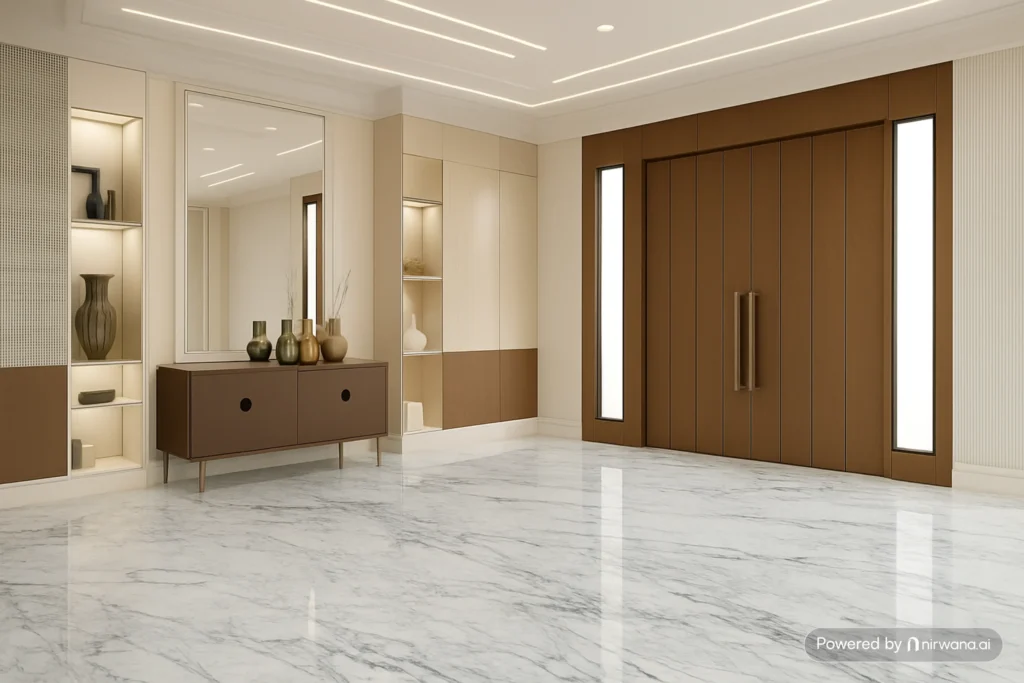
Conclusion: Which One Should You Choose?
When choosing between Carrara vs. Arabescato marble, it really comes down to the mood and personality of your space:
- Choose Carrara Marble if you prefer a soft, subtle, and classic look.
- Choose Arabescato Marble if you want a bold, expressive, and high-impact aesthetic.
- Both remain timeless choices that celebrate Italian heritage and craftsmanship — a testament to nature’s artistry and human refinement.