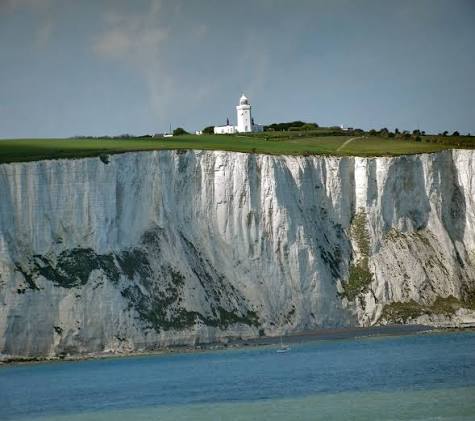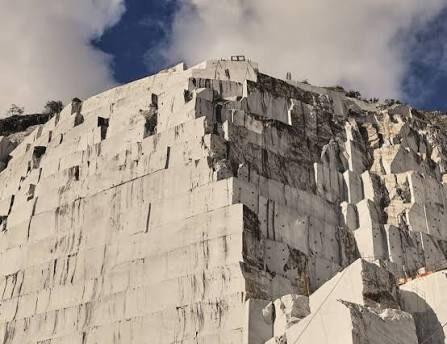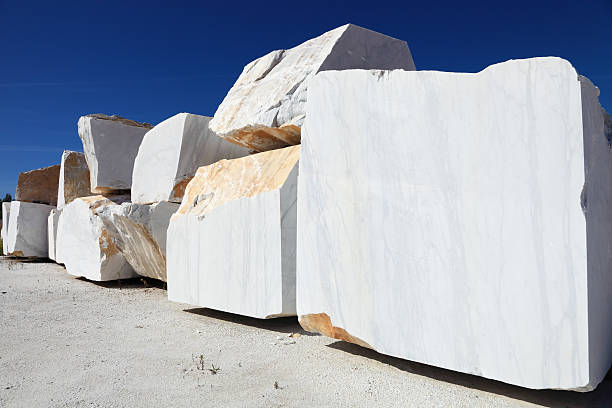
Somewhere deep under the ground in Namibia, millions of years before anyone thought about kitchens or living rooms, something incredibly slow was happening. No brushes, no artists, no plan. Just heat, pressure, and time, quietly working together on a piece of art that wouldn’t be finished for millions of years.
That piece of art is what we now call Dover White Marble. And once you understand how it actually got its soft, flowing veins, you’ll never look at a slab of it the same way again.
It All Begins With Something Ordinary
Here’s something most people don’t expect. Dover White Marble didn’t start out looking anything like it does today. It began as simple limestone, sitting quietly underground, made mostly from the remains of ancient sea creatures and mineral sediments that settled down over unimaginable stretches of time.
On its own, limestone is fairly plain. It doesn’t have that soft, creamy glow or those flowing grey lines. For that transformation to happen, the limestone needed something extra, a slow, powerful push from deep within the earth itself.
The Push That Changed Everything
Deep underground, limestone doesn’t just sit still forever. Over millions of years, the earth’s own movements, shifting plates, immense pressure, and rising heat, begin working on it. This process is called metamorphism, and it’s really just a fancy word for one simple idea: intense heat and pressure slowly transform one kind of rock into another.
Under all that heat and pressure, the limestone’s calcite crystals begin to change. They grow larger, rearrange themselves, and lock together in new patterns. This is the exact moment limestone quietly becomes marble, and it’s also the moment Dover White’s story really begins to take shape.
So Where Do the Veins Actually Come From?
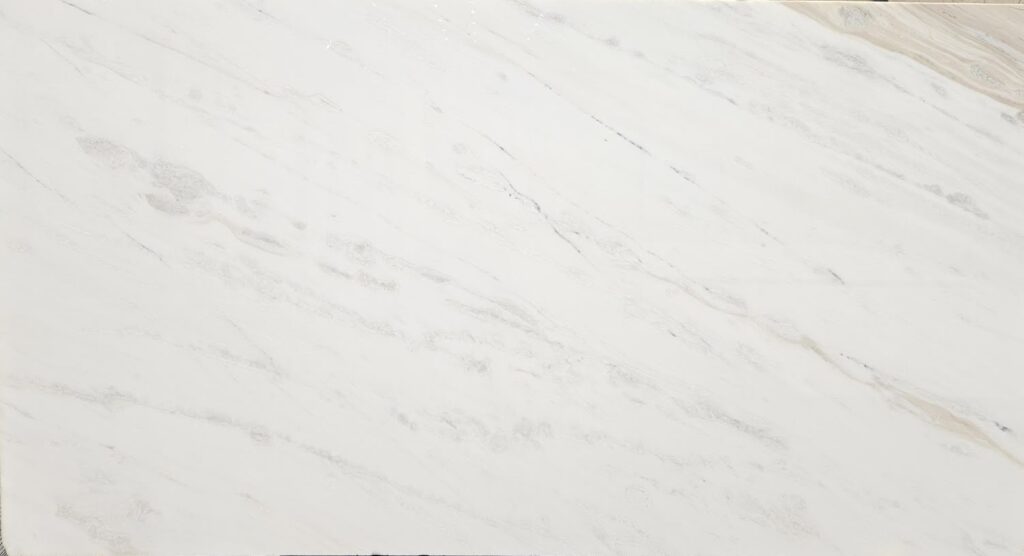
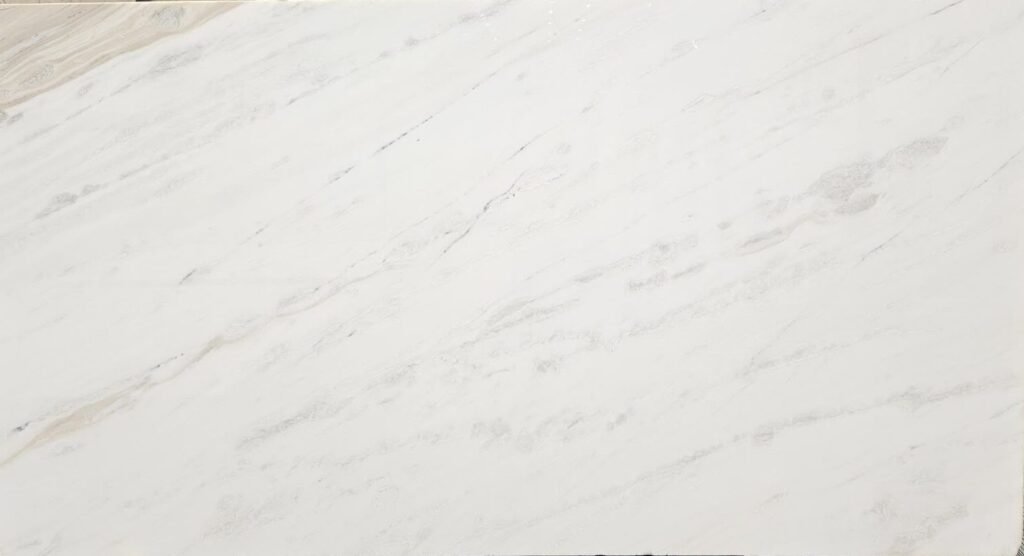
This is the part that surprises people the most. Those beautiful, flowing sublte off white brown veins that make Dover White Marble so recognizable weren’t drawn on top of the stone. They were never separate from it. They came from tiny impurities, small traces of other minerals that were sitting inside the original limestone long before it ever became marble.
As heat and pressure worked on the stone, these mineral traces didn’t just disappear. They moved. Mineral-rich fluids traveled through tiny cracks and weak spots inside the forming marble, and as they moved, they carried these impurities along with them, leaving trails behind. Those trails, frozen in place as the stone hardened, are exactly what we now see as veins.
This is also why Dover White’s veining looks so soft and flowing rather than sharp and geometric. The peach brown lines follow the natural, wandering path those ancient fluids took, moving gently through the stone the way water finds its way around obstacles, not in straight, deliberate lines.
Why Dover White’s Veins Look the Way They Do
Every marble’s veining pattern reflects the specific minerals it happened to contain, and Dover White Marble carries its own distinct signature because of this. Its creamy white to soft ivory background comes from a naturally pure calcite base, while the flowing veins running through it come from mineral traces that moved through the stone during formation, sometimes even carrying faint hints of green or blue depending on exactly what minerals were present.
No two slabs ever look identical, because no two sections of ancient limestone contained the exact same trace minerals in the exact same places. Every slab of Dover White Marble is, quite literally, a one-of-a-kind record of a process that took millions of years and happened only once, in that exact spot.
Why This Slow Process Actually Matters to You
It’s easy to look at a polished marble slab in a showroom and forget what it actually is. But once you know the real story, that flowing grey vein running across your kitchen island isn’t just decoration. It’s a visible record of something that happened deep underground, long before humans existed, shaped by forces working patiently over millions of years without any rush at all.
That’s really what makes marble different from anything manufactured. A factory can print a pattern in seconds. Nature took millions of years to create this one, and it will never make the exact same one twice.
Why Dover White Marble Is Loved in Modern Homes
Beyond its fascinating origin story, Dover White Marble has become a favorite for architects and homeowners because its soft, flowing veining brings warmth and movement to a space without feeling too bold or overpowering. Its creamy background pairs beautifully with both modern and classic interiors, and it’s often chosen for feature walls, countertops, and flooring where a gentle, natural elegance is exactly what a room needs.
Why Source Genuine Dover White Marble in Kishangarh
Because every slab’s veining is unique, choosing where you source your Dover White Marble in Kishangarh matters more than people realize. Buying from an established supplier gives you the chance to personally see and select the exact veining pattern that speaks to you, rather than hoping a random slab matches what you imagined.
Why Choose White Mansion Marble
As a trusted Best Marble Company in Kishangarh and a recognized Best Marble Company in India, White Mansion Marble understands that every slab of Dover White Marble tells its own story, and we help you find the exact one that fits yours. When you visit us, you can:
- Personally inspect real Dover White Marble slabs before you buy
- Compare veining patterns side by side to find the one you connect with
- Get honest guidance on grade, sourcing, and authenticity
- Learn the story behind the stone you’re bringing into your home
Frequently Asked Questions
Q1. How did Dover White Marble get its veins? The veins formed when mineral-rich fluids moved through tiny cracks in the limestone during its transformation into marble, leaving behind trails of trace minerals that hardened into the flowing grey veining we see today.
Q2. How long did it take for Dover White Marble to form? Marble formation typically takes millions of years, as heat and pressure deep underground slowly transform limestone into marble through a process called metamorphism.
Q3. Why does every slab of Dover White Marble look different? Because no two sections of the original limestone contained the exact same trace minerals in the exact same positions, every slab’s veining pattern is naturally unique and can never be exactly repeated.
Q4. What gives Dover White Marble its creamy background color? Its background comes from a naturally pure calcite base, the same mineral that forms the foundation of most white and light-colored marbles.
Q5. Where can I buy genuine Dover White Marble in India? Dover White Marble in Kishangarh is available through established suppliers who allow buyers to personally inspect and select slabs, ensuring you get genuine stone with the exact veining pattern you want.
Final Thought
The next time you walk past a slab of Dover White Marble, take a second look at its veins. What looks like a simple design detail is actually nature’s slowest artwork, a pattern quietly shaped over millions of years, with no two pieces ever exactly the same. That’s not just a marble slab. That’s a small piece of the earth’s own history, sitting right there in your home.
Want to see Dover White Marble’s natural artwork in person? Visit White Mansion Marble, a trusted best marble company in India and best marble company in Kishangarh, and explore genuine Dover White Marble in Kishangarh for yourself.